HI, I AM
ALLEN WANG
Software Engineer
I build end-to-end AI systems and applications. Currently in the robotics sector, focusing on research of Vision-Language-Action (VLA) models and cross embodiment problems.

Work
Research Assistant, Academia Sinica
Taipei, Taiwan
- Cross-Embodiment Representation: built a reusable data-processing and experimentation pipeline from AMASS datasets to compare humanoid models with different body proportions; extended Metamotivo-based control beyond a single embodiment.
- Force Helps Manipulation, Yet Force Similarity Alone Does Not Predict Task Compatibility (under review): developed sensorless 9D force estimation for SO-ARM101 with an EKF disturbance observer and integrated force tokens and an auxiliary prediction loss into ACT; across 7 real-robot tasks (>520 trials), force conditioning improved success on contact-rich tasks by 19%, while force-feature similarity proved decoupled from joint-training compatibility.
- 2026 BEHAVIOR Challenge: replaced the 2025 winning Pi0.5 VLA stage labels, which depend on episode length unavailable at inference, with completed BDDL goals as an observable progress signal; proposed a history-conditioned event head that uses cached multi-view history frames and turns stage classification into binary event detection, curbing error accumulation on long-horizon tasks at no extra inference cost.
AI Assistant Engineer, Tymphany
Taipei, Taiwan
- Developed and stabilised FlowAI, an agentic RAG-based planning framework for audio-processing workflows, integrating front-end and back-end functions for an internal engineering platform.
- Improved successful construction of acoustic processing flows from an initially unsuccessful state to above 90%, while adding context-memory control by adding tiered context management by introducing paged tiered context memory (persistent working context + on-demand retrieval from external storage), bounding token growth.
- Ported and validated a noise-reduction model and audio DSP pipeline on an embedded board, comparing quantised and on-device outputs against floating-point references on a fixed test set.
- Used Jira, daily stand-ups and weekly written pitches to coordinate development and propose product improvements with remote colleagues.
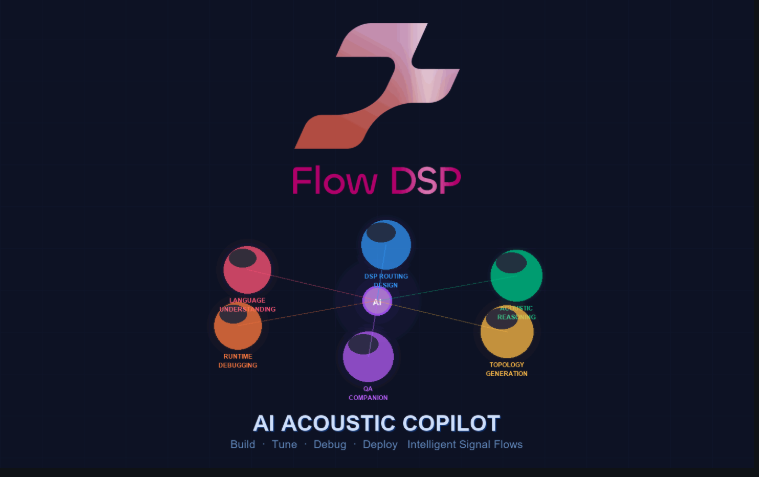 FlowAIBuilding an agentic workflow system with parallel agents, ReAct subagents, RAG-based tool retrieval, and tiered context management
Software Engineer Intern, AIFT
Remote
- Developed front-end (React/TypeScript) and back-end (Python/FastAPI) features for the RiskMarket SaaS product, working in a distributed team with Git-based PR review and CI/CD.
- Built backend services for a decentralised prediction market: smart-contract market creation, an O(log n) red-black-tree order-matching engine, and on-chain settlement of off-chain matched trades.
Quantitative Researcher Intern, Yuanta Securities
Taipei, Taiwan
- Traced out-of-sample degradation from added microstructure features to collinear order-book signals and leakage across overlapping return windows; rebuilt LassoCV with time-ordered walk-forward validation and purged boundaries, removing look-ahead leakage at lower training cost than the original k-fold pipeline.
- Lifted out-of-sample R² from 0.013 to 0.014 on high-frequency return prediction with a tuned GRU model, evaluated under the corrected validation scheme.
Quantitative Researcher Intern, Medina Partners
Taipei, Taiwan
- Engineered and selected alpha signals based on financial datasets; optimized factor combinations using feature engineering.
- Conducted event-driven abnormal return studies on public equities.
Posts
A collection of technical write-ups and notes — feel free to take a look.

Reinforcement Learning(I)
From basic concepts and the Bellman equation to value iteration and policy iteration under a known model
- 中文
Reinforcement Learning(II)
From model-based to model-free reinforcement learning, from Monte Carlo, Robbins-Monro and SGD to TD learning, Sarsa and Q-learning
- 中文
Reinforcement Learning(III)
From tabular to function approximation, DQN, policy gradient, REINFORCE and actor-critic
- English
Robot Learning - World Models
Class notes from ETH Zürich's Robot Learning: From Fundamentals to Foundation Models — world models versus policies, pixel and latent action-conditioned world models from World Models to Dreamer V4, video tokenization, world action models such as DreamZero, and predicting in latent space with JEPA.
- English
Robot Learning - Sequence Modeling and Transformers
Class notes from ETH Zürich's Robot Learning: From Fundamentals to Foundation Models — why robot policies need history, how Transformers and LLMs scale, extending them to vision (CLIP, LLaVA, Flamingo), and tokenizing robot actions with action chunking and FAST.
- English
Robot Learning - Generalist Robot Policies
Class notes from ETH Zürich's Robot Learning: From Fundamentals to Foundation Models — generalist robot policies, from Octo and CrossFormer to VLAs like OpenVLA and π0.
